Bodrum’s Village Markets: Which Day, Where
Gümüşlük on Wednesday, Turgutreis on Saturday, Yalıkavak twice a week: a day-by-day guide to the Bodrum Peninsula's weekly markets and how to shop them.
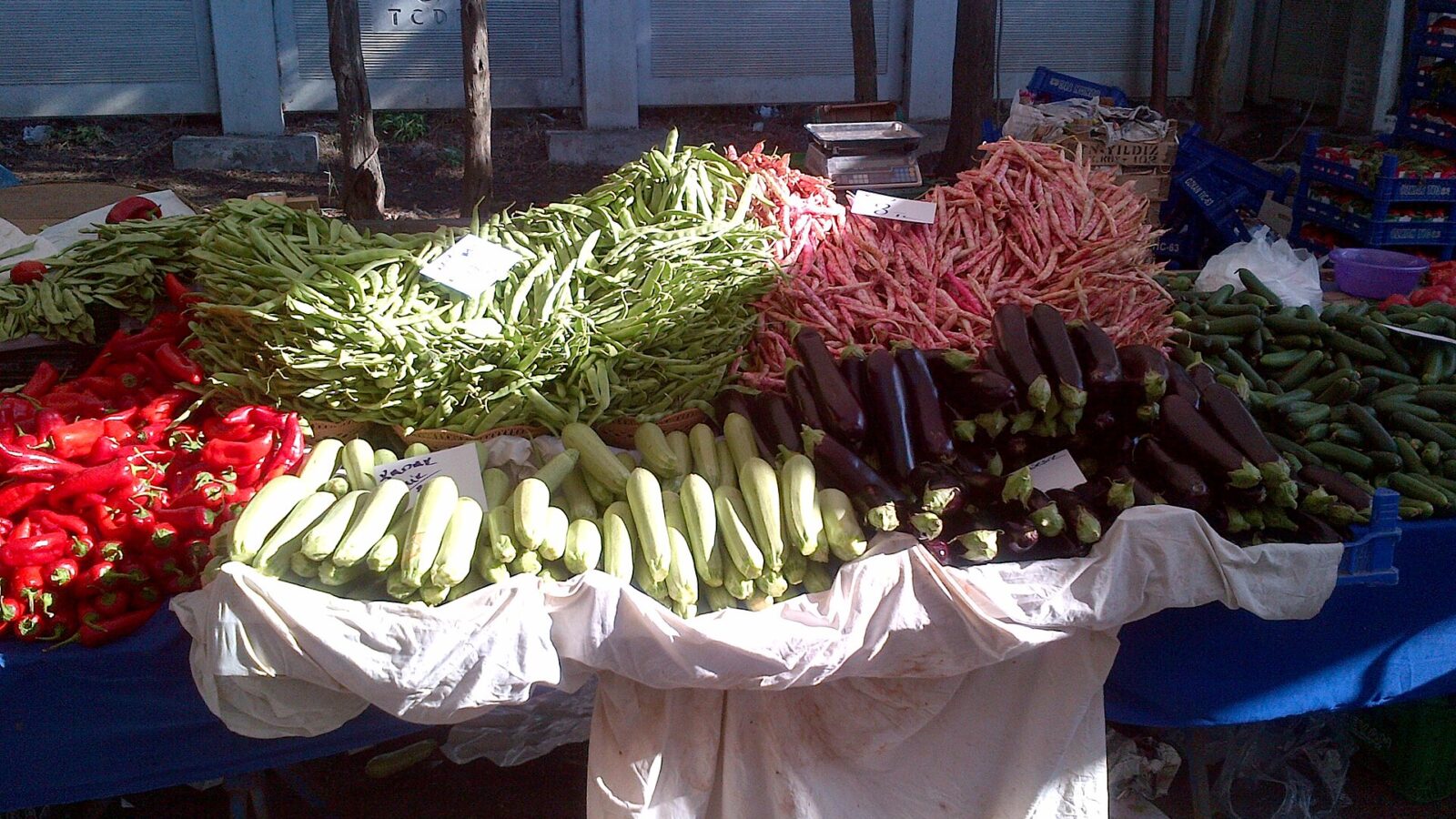
Every village on the Bodrum Peninsula has its market day, when a car park or side street fills with awnings, crates of tomatoes and women selling bunches of wild greens. Planning your week around them is one of the easiest ways to eat well and see how the peninsula actually lives. Here is which day goes where, and how to make the most of it.
How the markets work
Turkish weekly markets are called pazar, and on the peninsula they come in a few types. The everyday kind is the fruit and vegetable market (sebze-meyve pazarı), which also sells cheese, olives, eggs, honey, spices and dried goods. Some towns hold a separate clothing and household market (giyim or tuhafiye) on a different day. There are also producers’ markets (üretici pazarı), where the sellers grew or made what they sell, and a few second-hand and antiques markets at weekends.
Markets set up early in the morning and usually run until late afternoon, though the best produce goes first and some sellers pack up early on hot days.
The weekly calendar
The days below follow the market list published by Bodrum Municipality, cross-checked against recent local guides. Days occasionally change, and a few sources disagree, so check locally before planning a trip around one market.
| Day | Main fruit and vegetable markets | Other markets that day |
|---|---|---|
| Monday | Türkbükü, Güvercinlik, Kumbahçe | |
| Tuesday | Yalıkavak, Gölköy, Dereköy | Bodrum centre (household goods) |
| Wednesday | Gümüşlük, Gündoğan, Akçaalan, Müskebi (Ortakent) | Bodrum centre (producers’ market) |
| Thursday | Bitez, Akyarlar, Bodrum centre | Yalıkavak (clothing) |
| Friday | Bodrum centre, Konacık, Yalıçiftlik | Müskebi (household goods) |
| Saturday | Turgutreis, Yaka | Müskebi (producers’ market), Yalıkavak (second-hand) |
| Sunday | Gümbet, Yahşi (Ortakent), Mumcular, Kızılağaç, Koyunbaba, Dirmil | Bodrum centre (antiques), Bitez and Turgutreis (second-hand) |
A few notes where sources differ. Some older guides put Yalıkavak’s produce market on Wednesday rather than Tuesday; the municipality lists Tuesday. Turgutreis’s big market is on Saturday; the Sunday market there is a second-hand one. Ortakent’s markets are split between the Müskebi and Yahşi neighbourhoods, which can be confusing if you just ask for “Ortakent pazarı”.
Markets worth planning around
Gümüşlük, Wednesday
The local market for anyone staying in Gümüşlük, smaller and calmer than the big town markets. Come for seasonal fruit and vegetables, village eggs, cheese and olives, and in winter and spring the small bunches of wild greens. Combine it with a slow coffee by the water; our slow day in Gümüşlük suggests how.
Turgutreis, Saturday
One of the largest markets on the peninsula, with a long produce section and a busy textiles and household area. It draws people from across the western villages, so arrive early in summer. Parking nearby fills quickly.
Yalıkavak, Tuesday and Thursday
Yalıkavak’s produce market is on Tuesday and its clothing market on Thursday, with a second-hand market on Saturday. A good excuse to visit the town and its harbour.
Bodrum centre, through the week
The town has a market almost every day: household goods on Tuesday, a producers’ market on Wednesday, fruit and vegetables on Thursday and Friday, and antiques on Sunday. The Friday produce market is the one most people mean when they say “Bodrum market”.
Ortakent, Saturday producers’ market
On Saturday mornings a producers’ market organised with the Bodrum Seed Association (Bodrum Tohum Derneği) gathers small growers selling heirloom vegetables, honey, homemade tarhana and noodles. Go early; it is popular with people who cook seriously.
Tip: For the full range of wild greens, visit a market in late winter or spring. Our field guide to Aegean greens will help you name what you see.
What to buy, season by season
- Spring: wild greens, wild asparagus, artichokes, broad beans, the first strawberries.
- Summer: tomatoes, peppers, aubergines, courgettes and their flowers, figs, melons, grapes.
- Autumn: pomegranates, quinces, fresh walnuts, pekmez (grape or carob molasses), new-season olives.
- Winter: Bodrum’s own tangerines (Bodrum mandalinası, a registered local product), citrus of all kinds, leeks, cabbages and the first greens after the rains. The town celebrates the tangerine with a festival in December; recent editions have been held in Bitez. See events for dates.
Year round, look for local olive oil, village cheeses, herbs for tea (sage, thyme, mountain tea), pine honey and dried figs.
Loading the map…
How to shop like a local
- Go early. By 9am the best produce is on show and it is still cool. In summer, the middle of the day is hot under the awnings.
- Bring bags and small notes. Cards are increasingly accepted, but not by everyone.
- Prices are per kilo and usually written on a card. Light haggling is not really the custom at produce stalls; at clothing stalls there is a little more room.
- Taste. Sellers will often hand you a slice of fruit or an olive to try.
- Watch the scales, as you would anywhere, and count your change.
- Late afternoon brings lower prices on soft fruit and vegetables as sellers pack up.
Good to know: In winter some of the smaller village markets shrink to a handful of stalls, and in very bad weather sellers may not come at all. Bigger markets such as Turgutreis and Bodrum centre generally keep going through the winter.
Before you go
- Check locally: Ask at your accommodation or in the village shop which day the nearest market is held this season. Locations can move within a village.
- Parking: Market days bring traffic. If you are going to a large market, try to arrive before 9am or after 3pm.
- Holidays: Markets may shift or close on the main religious holidays (bayram).
- Dolmuş: Most markets are on or near the minibus routes, which is often easier than driving.
- Cooking: If you are staying somewhere with a kitchen, a market morning is the start of the best meal of your trip. If you are thinking about a longer stay, see where to stay.