Gümüşlük: A Guide to the Village at the End of the Peninsula
A fishing harbour built over an ancient city, with low stone houses, tables at the water's edge and some of the best sunsets on the Bodrum Peninsula.
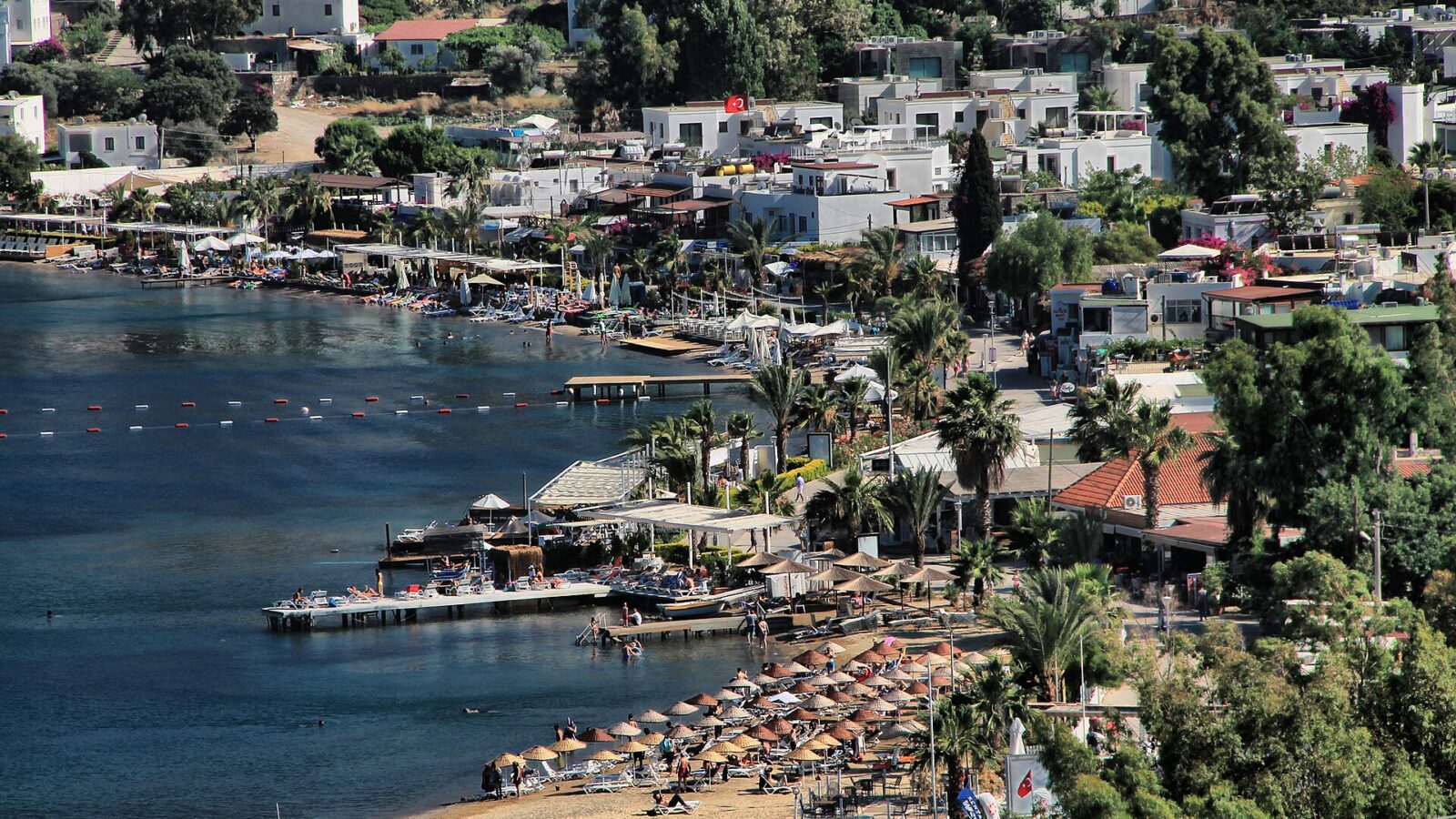
Gümüşlük sits at the far western end of the Bodrum Peninsula, about 22 km from Bodrum town, where the land runs out and the sea opens towards the Greek islands. It is a small fishing harbour with a few thousand year-round residents, built over the remains of the ancient city of Myndos. Because of that, it has grown far more slowly than the rest of the coast, and it still feels like a village.
Where it is and what it looks like
The village wraps around a deep, sheltered bay facing west. On one side is the harbour, with fishing boats and a line of restaurants whose tables stand almost in the water. On the other is a sand-and-shingle beach that runs north towards the low hills. Between the two, a narrow strip of shallow water leads out to Rabbit Island (Tavşan Adası).
Behind the waterfront, the village climbs gently inland through olive groves and gardens towards the stone village of Karakaya. Yalıkavak is about 10 km to the north-east and Turgutreis a short drive to the south, but neither is visible from the bay.
Myndos and Rabbit Island
Myndos was a significant harbour city in antiquity, strong enough to turn back Alexander the Great’s attempt to take it during his siege of Halicarnassus in 334 BC. Its walls, foundations and scattered column pieces still turn up all over the village: in gardens, along the beach path and under the water itself. Parts of the old seafront slipped below the surface long ago, so on a calm day you can see worked stone beneath your feet as you swim.
The best-known remains lie on the way to Rabbit Island, where the line of an ancient wall or mole runs across the shallows. Most people wade over in water that is usually knee- to waist-deep. Parts of the island have been fenced off for excavations in recent years, so how much you can explore varies. Our guide to walking to Rabbit Island covers footwear, sea urchins and the best time of day, and Myndos, the ancient city beneath Gümüşlük tells the longer story.
Good to know: The underwater stones are slippery and home to plenty of sea urchins. Wear water shoes and take it slowly.
A protected village
Much of Gümüşlük lies within a first-degree archaeological site, the strictest level of protection in Turkish heritage law, and the area has been under some form of protection since the 1970s. In practice this means low-rise building, no large hotels on the bay and a waterfront that looks much as it did decades ago. Development pressure has not gone away, and local residents have campaigned more than once to keep the rules as they are.
The result is a place with real character: one- and two-storey houses, bougainvillea over garden walls, a scatter of small galleries and workshops, and very little concrete in sight from the water. It is also why artists, writers and musicians have been drawn here for decades, as we explore in why artists and musicians fell for Gümüşlük.
The harbour and the waterfront
Evening is when Gümüşlük is at its most itself. The bay faces west, so the sun drops behind the headland and the islands, and the waterfront fills with people who have driven from across the peninsula for dinner. Fish and meze are the core of the menu, eaten slowly with a view of the boats. How to eat on the Gümüşlük waterfront explains how ordering fish works, what to expect on the bill and how to avoid the sunset rush.
Mornings are a different place entirely: fishermen mending nets, the beach almost empty, coffee in the shade. If you want to see both sides, a slow day in Gümüşlük is a good template. A weekly market is held in the village, usually on Wednesday.
Karakaya and Koyunbaba
Above the bay, Karakaya is an old stone village on the hillside with long views over Gümüşlük and the sea. It is quieter than the harbour, with a small mosque, narrow lanes and a handful of places to eat at sunset. See Karakaya, the stone village on the hill.
Koyunbaba is the rugged stretch of coast and hillside close to Gümüşlük, known for its rocky shore and for the ancient stone quarries that, according to tradition, supplied stone for the Mausoleum of Halicarnassus. Since 2004 those quarries have been the main stage for the International Gümüşlük Music Festival, which runs through July and August.
Getting around
Dolmuş minibuses run between Bodrum’s main bus station and Gümüşlük throughout the day, more often in summer and less often in winter, and the trip takes roughly 40 minutes. Turgutreis has frequent connections too. Cars are kept off the waterfront, so drivers use the paid car parks at the edge of the village and walk the last few minutes.
Inside the village, you walk. For bays and other villages, a car or scooter helps, and taxis are available but not cheap. For the airport, see how to get from Bodrum Airport to Gümüşlük.
Tip: On summer evenings the car parks fill up around sunset. Arrive early or come by dolmuş, and check the time of the last one back.
Seasons
July and August are busy, hot and often windy in the afternoons, with full restaurants and slow traffic on the roads in. June and September are calmer and the sea is warm. October is quieter still, with soft light and swimmable water, which is why we wrote about September and October as the golden months.
From November to March many waterfront restaurants close or open only at weekends, and the village returns to its residents. It is green, cool and sometimes stormy, but sunny days are common. Our seasons page has the month-by-month detail.
Who it suits
Gümüşlük suits people who like walking to dinner, swimming off rocks, reading in the shade and watching the light change. Couples, slow travellers, writers, remote workers and families with younger children tend to settle in easily.
It is less suited to anyone after nightlife, big sandy beaches with water sports or a resort with everything on site. If you are still deciding, Gümüşlük, Yalıkavak or Bodrum Town? compares the options honestly, and the peninsula guide covers the other villages.
Loading the map…
A Slow Day in Gümüşlük, from Morning Coffee to Sunset
Coffee by the fishing boats, a wade to Rabbit Island, a long lunch, a short climb and dinner as the sun drops…
Gümüşlük, Yalıkavak or Bodrum Town? Choosing Your Base on the Peninsula
Seven places on one small peninsula, each with a different rhythm. How to choose where to sleep, based on how you actually…
Karakaya, the Stone Village on the Hill above Gümüşlük
A cluster of old stone houses on a dark ridge above Gümüşlük, with long views to the sea. What Karakaya is, how…