A Day Trip to Kos from Bodrum
Ferries, passports and Schengen rules, what to see in Kos Town and how to time the return: a practical guide to hopping across to Greece for the day.
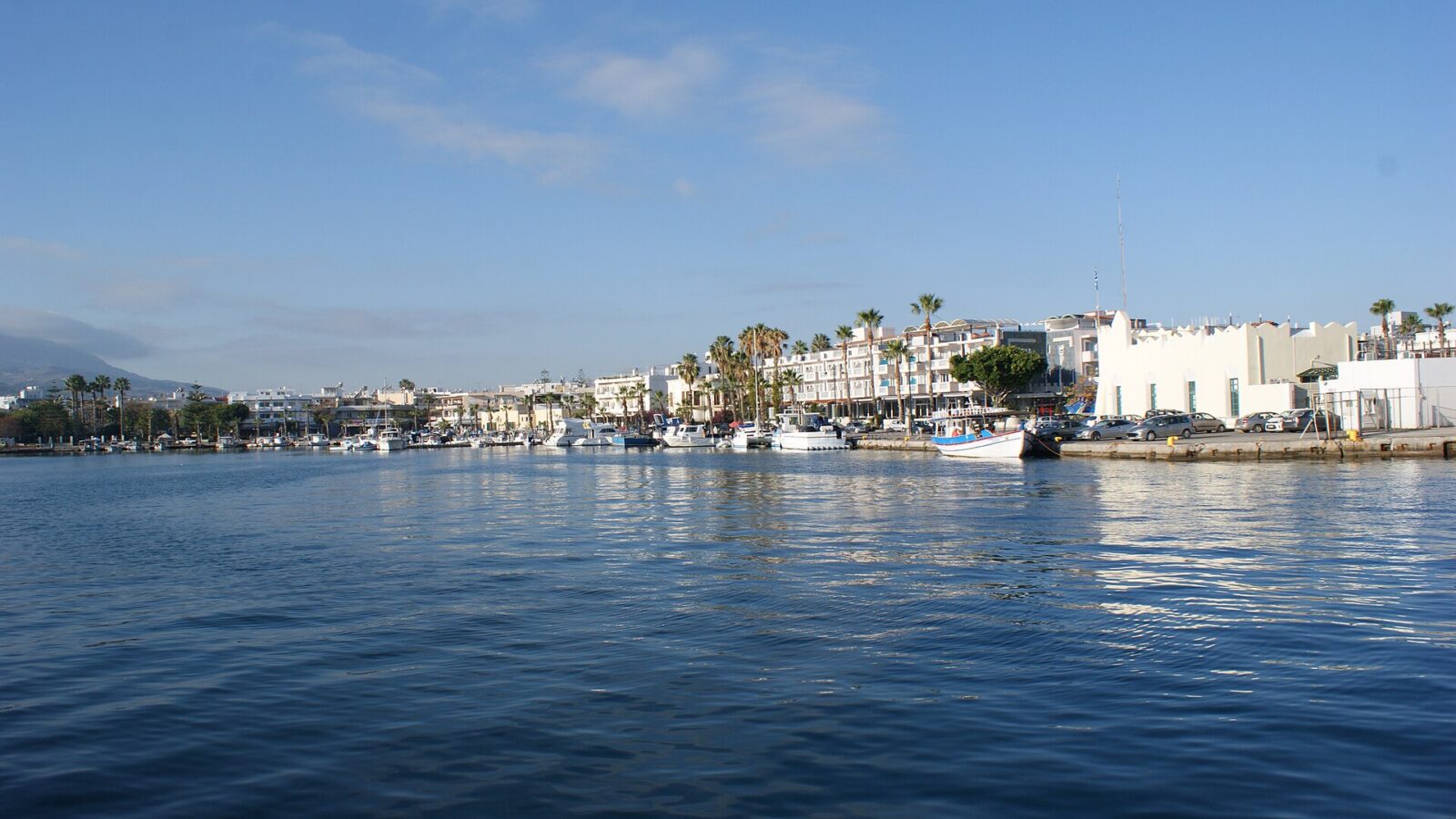
On a clear day you can see Kos from much of the Bodrum Peninsula, a long low island across a narrow strait. It is in Greece, in the EU and in the Schengen Area, and the crossing from Bodrum is short enough for an easy day trip. It is one of the simplest ways to add a second country to your holiday, as long as you get the paperwork and timings right.
The ferry crossing
Ferries to Kos leave from the Bodrum Cruise Port, a short taxi ride from the town centre. Several Turkish and Greek companies run the route, using fast catamarans for foot passengers and slower car ferries. The crossing usually takes 30–45 minutes, arriving at the harbour in Kos Town.
In summer, roughly April to October, there are typically several sailings a day, with morning departures from Bodrum and late-afternoon returns from Kos, which is exactly what a day trip needs. Some summer sailings also run from Turgutreis, which is closer to Gümüşlük, so check both. In winter, the service drops to a few sailings a week, and day trips may not be possible on every day.
As of 2026, adult fares are roughly €25–35 one way, and a return ticket is usually cheaper than two singles. Book online or through an agency in advance in July and August, when boats fill up.
Tip: Be at the port at least an hour before departure, and more in high summer. You have to check in, put bags through security and pass Turkish exit passport control, and queues can be long.
Getting to the port from Gümüşlük
From Gümüşlük, Bodrum’s cruise port is about 40 minutes by car or taxi in normal traffic. By public transport, take a dolmuş to the old bus station in Bodrum town and then a short taxi or walk along the seafront. For an early sailing, a taxi or a pre-arranged driver is far less stressful.
Passports, visas and the Schengen rules
This is the part that needs care, because you are leaving Türkiye and entering the Schengen Area, then doing the reverse in the evening.
- Bring your passport. EU citizens may be able to travel with a national ID card, but a passport is the simplest choice and avoids surprises on either side.
- Schengen entry rules apply in Kos. If your nationality needs a Schengen visa, you need one for Kos. Visa-free nationals (including UK and US citizens) can enter without one, and the day counts towards your 90 days in any 180-day period in the Schengen Area.
- The EU’s Entry/Exit System (EES) has been fully operational at Schengen external borders since April 2026. Non-EU travellers have their fingerprints and photo taken on their first entry, which can add time to passport control the first time you cross.
- ETIAS, the EU’s planned pre-travel authorisation for visa-free visitors, has been repeatedly delayed. Check whether it is in force before you travel.
- Coming back into Türkiye. If you entered Türkiye on a single-entry e-Visa, you may need a new one to return. Visa-free visitors simply re-enter, but the days still count towards your 90 in 180 in Türkiye.
Rules change, so check official government sources for your nationality before booking.
What to do in Kos Town
Kos Town is compact, flat and easy to explore on foot or by bike, and almost everything a day-tripper needs is close to the harbour.
- The Castle of the Knights (Neratzia) guards the harbour entrance. Built by the Knights of St John, it is the natural first stop, with views back across the water to Bodrum. Restoration work has affected opening in recent years, so check before you go.
- The Hippocrates Plane Tree stands nearby, an ancient tree linked by tradition to the father of medicine, who was born on Kos.
- The Ancient Agora and the western archaeological site are scattered through the town, with columns, mosaics and Roman streets in open, walkable areas.
- The Asklepieion, the healing sanctuary associated with Hippocrates’ teaching, lies a few kilometres outside town on a hillside. Go by taxi, tourist train or bike.
Kos is known for its cycle paths, and hire bikes are easy to find near the harbour. A flat ride along the seafront to the beaches east or west of town is a good way to spend the afternoon.
For lunch, walk a street or two back from the harbour, where tavernas aimed at locals tend to be better value than the busy front row.
Practical details for the day
- Currency: Kos uses the euro. Cards are widely accepted, but carry some cash for small purchases.
- Time: Greece changes its clocks; Türkiye does not. In summer, Kos and Bodrum are on the same time. From the last Sunday of October until late March, Kos is one hour behind. Check which time your return ferry ticket uses.
- Phones: If you have an EU SIM, roaming is normally included in Greece. Turkish SIMs and many non-EU plans charge for roaming, so check before you leave.
- Duty free: Limits apply when you come back into Türkiye; check the current allowances if you plan to shop.
Good to know: Do not cut your return close. The last ferry back is usually in the late afternoon or early evening, and if you miss it, you will need a hotel in Kos for the night.
Is it worth it?
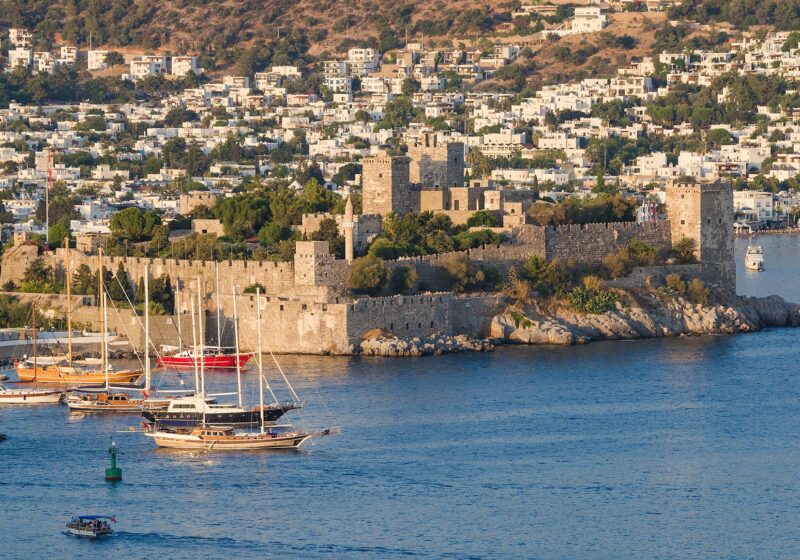
If you have a week or more on the peninsula and like history, a day in Kos makes a good contrast: Greek tavernas, Ottoman and Italian-era layers over the ancient city, a different language in the streets, all within sight of Bodrum’s own castle. If you are only here for a few days, you may prefer to spend them on the Turkish side, exploring the best beaches near Gümüşlük or taking a boat day instead.
Before you go
- Check passport validity and Schengen entry rules for your nationality.
- Book return ferry tickets in advance in summer, and confirm the return time.
- Arrive at the port at least an hour early.
- Bring euros, sunscreen and comfortable shoes for walking or cycling.
- For getting around the peninsula, see our Plan Your Trip section and our first-time tips.