Karakaya, the Stone Village on the Hill above Gümüşlük
A cluster of old stone houses on a dark ridge above Gümüşlük, with long views to the sea. What Karakaya is, how to get up there and how to visit well.
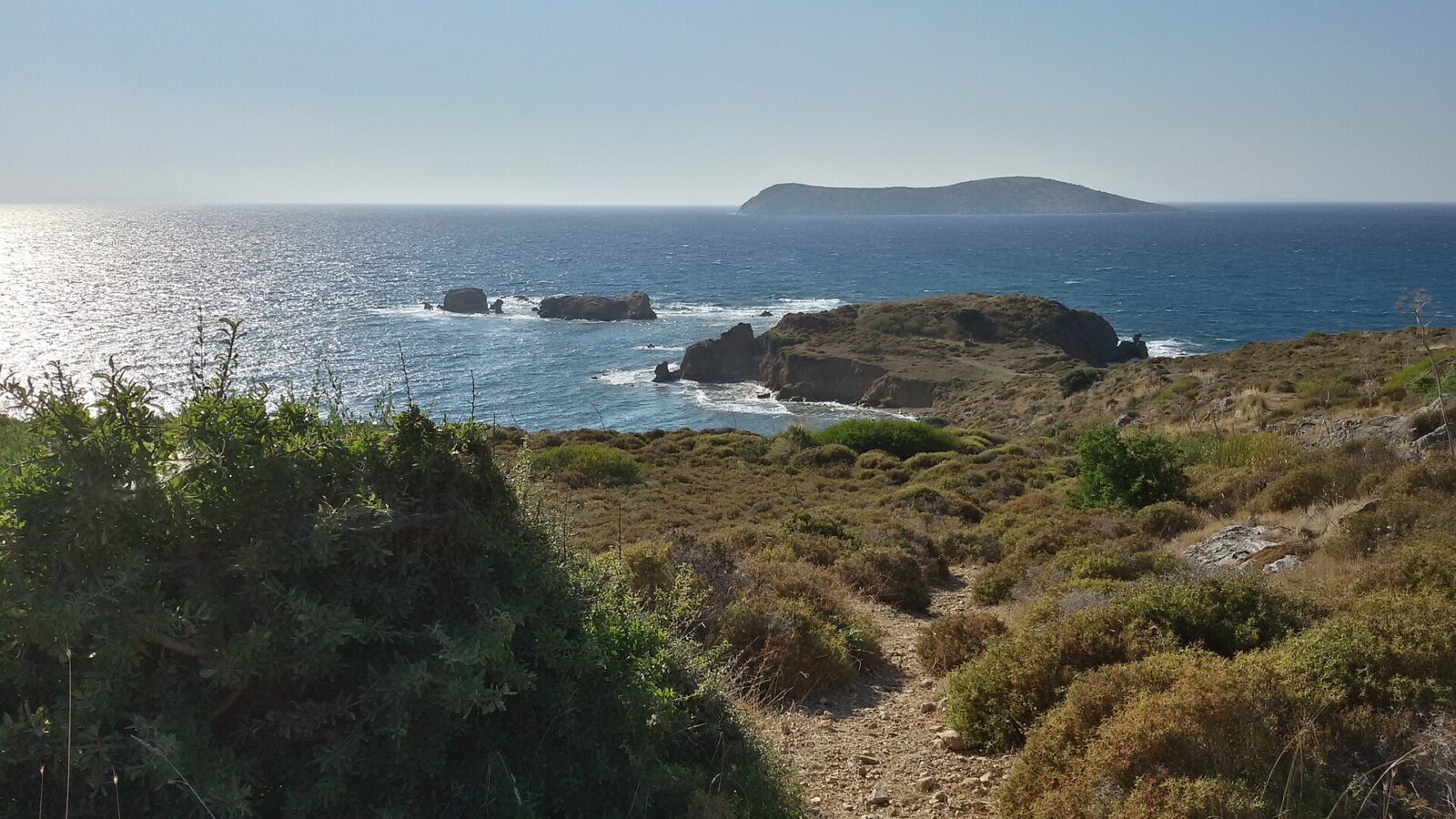
Look up from the Gümüşlük waterfront towards the hills and you may spot a scatter of grey stone houses high on a dark outcrop. That is old Karakaya, one of the peninsula’s few hill villages that still looks much as it must have done generations ago.
It is not a sight in the usual sense. There is no ticket, no museum and very little to buy. You go for the walk, the stone, the silence and the view back down to the sea.
A village built away from the sea
Karakaya means “black rock” in Turkish, and the name fits: the houses sit among and against outcrops of dark stone, which is why the village can be hard to pick out from a distance.
Local tradition says the village is around 800 years old and was built high on the ridge so that its people were safe from raiders landing on the coast below. Several hill villages on the peninsula share a similar story, and it matches the old pattern around the Aegean, where farming families often lived inland and went down to the shore only to fish or work fields.
The detailed history is not well documented, and accounts differ. Some describe Karakaya as a former Greek village emptied after the population exchange of 1923; others point to its small Ottoman mosque, said to be roughly three centuries old, as a sign of a long-settled Muslim community. Treat any single neat story with caution.
What you will see
Old Karakaya is a tight knot of stone houses connected by narrow, steep lanes, many of them more like stepped paths. Estimates put the number of historic houses at around sixty, of which roughly half have been restored. The rest range from roofless shells to piles of stone with fig trees growing out of them.
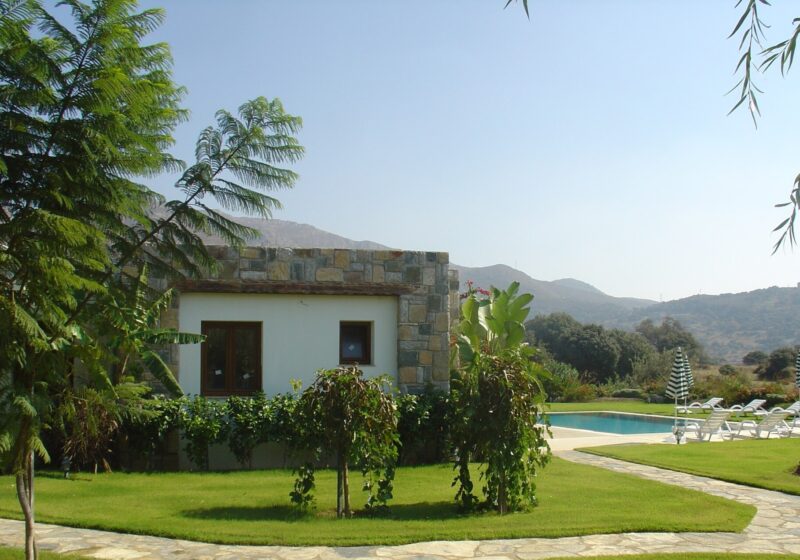
Restored houses keep the plain, cubic Bodrum style: thick walls of rough local stone, small windows, flat roofs. Traditionally these roofs were made of reeds covered with packed earth. Look out for the small mosque, the dry-stone terraces below the village and the way each house seems to grow straight out of the rock.
Loading the map…
Who lives there now
Like many hill villages, Karakaya lost most of its people as life shifted down to the coast, and many houses fell into ruin. By the 1980s outsiders, among them buyers from Germany and France and later Turkish writers and photographers, had begun restoring houses. The area was later declared a protected site, which slowed building and made restoration far harder to get permission for. That is largely why Karakaya still looks the way it does, while the slopes around it have filled with newer villas.
Only a handful of households live here all year. In summer more houses open up, but even then it is quiet. In winter you may meet no one at all except a dog or two.
Good to know: People live in these houses. Keep to the lanes, do not walk into gardens or courtyards, and keep your voice down. Ask before photographing anyone.
The view
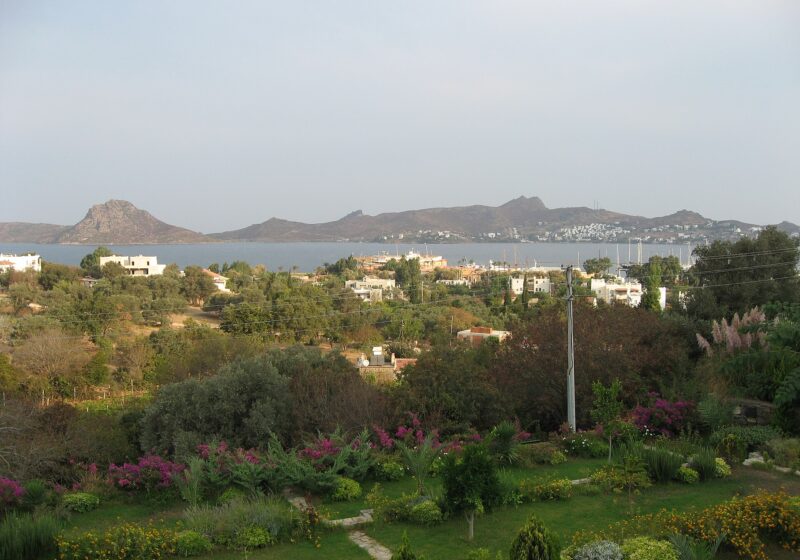
The reason most people come up is the panorama. From the top of the village you look down on Gümüşlük’s bay, Rabbit Island and the open sea to the west, with islands on the horizon on a clear day. The land between is a patchwork of olive groves, scrub and stone walls.
Late afternoon is the best time. The stone turns warm and golden, and if you stay for sunset you watch the sun drop into the sea from well above it, which feels quite different from watching it at water level. See our sunset spots for comparisons around the peninsula.
Getting there
Karakaya is a few kilometres inland and uphill from Gümüşlük, about 3 km from the centre by most accounts. Coming from the main road, look for signs to “Eski Karakaya” (old Karakaya).
- By car or taxi: The road up is narrow, steep and winding in places. Cars cannot enter the old village itself; park where the road ends and walk in.
- On foot: You can walk up from Gümüşlük, allowing about an hour, mostly uphill. In spring and autumn this is a pleasant walk; in July and August, start very early or do not bother.
- By dolmuş: Public transport does not go up into the village. You could take a Gümüşlük minibus and ask to be dropped near the turn-off, but expect a steep walk from there.
Once inside, everything is on foot. The lanes are uneven stone and gravel, so wear shoes with grip and carry water.
Combining it with the rest of your day
Karakaya fits well into a slow day in Gümüşlük: wander the village in the late afternoon, watch the light, then drive or walk back down for dinner by the water. A couple of restaurants with terraces on the hillside near the village have long drawn people up for the view at sunset; check that they are open before you rely on them, especially out of season.
If you enjoy this kind of walking, the Carian Trail walks take you further along the peninsula’s hills.
Before you go
- Best seasons: April to early June and late September to November, when it is cool enough to walk and the hills are green or golden.
- Facilities: Do not expect shops, toilets or a café in the old village. Bring water and anything else you need.
- Light: Late afternoon for photographs; the west-facing slope is in shadow early in the morning.
- Respect the place: Karakaya survives because it is quiet. Visit lightly, leave nothing behind and do not climb on walls or ruins.