Walking the Carian Trail (Karia Yolu) near Gümüşlük
Where the 820 km Carian Trail meets the Bodrum Peninsula, the old village paths around Gümüşlük, and when it is cool enough to walk them.
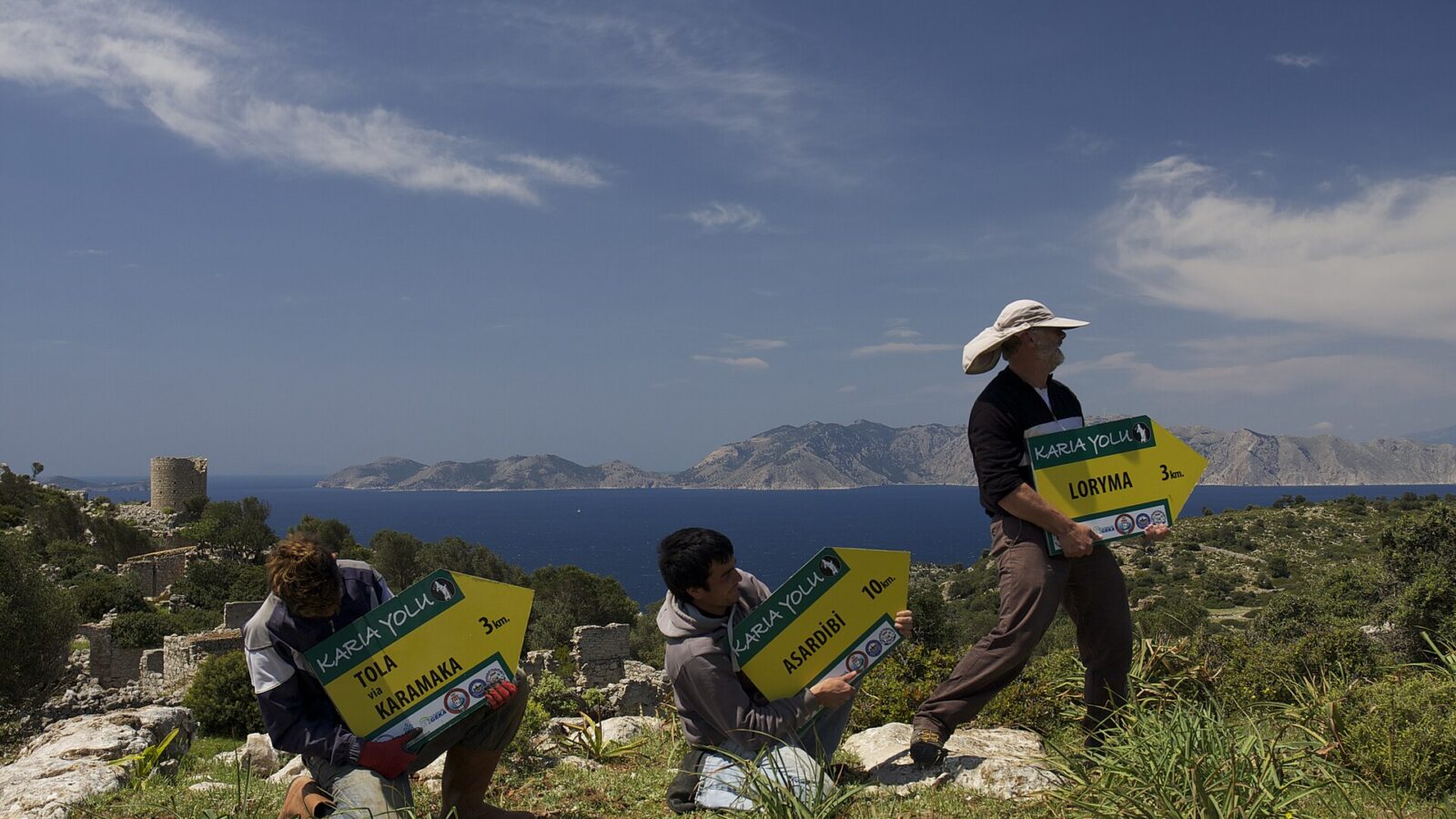
The Bodrum Peninsula looks like a place for swimming, but behind the bays is a dry, rocky upland of stone walls, windmills, olive terraces and old mule paths. The long-distance Carian Trail ends here, and around Gümüşlük there are shorter paths that are perfect for a cool morning. This is an honest guide to what is waymarked, what is not, and when to go.
The Carian Trail in brief
The Carian Trail (Karia Yolu) is a long-distance walking route through ancient Caria, the region of south-west Türkiye between Marmaris, Muğla, Milas and Bodrum. It was mapped from 2009 and officially opened in February 2013. At roughly 820 kilometres and 46 stages, it is one of the longest waymarked trails in the country.
The route is divided into sections: the Bozburun Peninsula, the Datça Peninsula, the Gulf of Gökova (also called the Ceramic Gulf), the Carian hinterland around Milas and Lake Bafa, the area around Muğla, and a short, separate stretch at Dalyan. Like other Turkish long-distance routes, it is marked with red and white painted stripes on rocks, walls and trees, plus signposts at junctions.
Where it meets the Bodrum Peninsula
Here is the important bit for anyone staying in Gümüşlük: the Carian Trail does not pass through the village. The Gulf of Gökova section runs from Akyaka west along the north shore of the gulf, crosses into the Bodrum hinterland and finishes at Pedasa, an ancient hilltop settlement on the hills just north of Bodrum town, above Konacık.
From Gümüşlük, the end of the trail is roughly half an hour or more by car, depending on traffic. Pedasa itself makes a fine short walk: a climb through scrub to the remains of ancient walls, with wide views towards Bodrum and the sea. It is often described as one of the Lelegian settlements of the peninsula, after the Leleges, an ancient people associated with this coast, and these scattered hilltop sites are one of the quieter pleasures of walking here.
Good to know: Wildfires in the summer of 2021 damaged parts of the Gulf of Gökova section and blocked some stages for a time. A local route known as the Leleg Yolu (Lelegian Way) has been suggested as an alternative from Yalıçiftlik to Bodrum. Check the trail’s official route updates before walking any of the eastern stages.
Walking around Gümüşlük
Gümüşlük has no official long-distance route of its own, but the land around it is threaded with old paths that once connected villages, fields and wells. They are not systematically waymarked, so treat these as ideas rather than directions, and ask locally for the current way through.
Up to Karakaya
The stone village of Karakaya sits on the hill above Gümüşlük, and walkers have long used the old tracks between the two. The climb is steady rather than hard, and the reward is the view back over the bay and the islands. Allow roughly an hour each way at an easy pace, depending on the route you take, and plan to stop for tea at the top. Read more about the village in Karakaya, the stone village on the hill.
Myndos and the headland
The ruins of ancient Myndos lie under and around Gümüşlük itself. A slow walk along the shore, past the remains of the old city walls and out towards the headland, is a good way to understand the place. Our piece on Myndos, the ancient city beneath Gümüşlük explains what you are looking at.
Rabbit Island
Not really a hike, but on calm days you can wade across the shallow channel to Tavşan Adası. See walking to Rabbit Island for how and when.
Loading the map…
When to walk
The peninsula is a winter and shoulder-season walking destination. The Carian Trail’s own guidance recommends spring, autumn and winter, and that matches local experience.
- March to May: The best months. Hillsides are green, wildflowers are out, and the air is mild. See spring on the Bodrum Peninsula.
- October and November: Warm days and cooler mornings, often with clear light. The first autumn rains bring the green back.
- December to February: Often very good walking weather between rainy spells, though paths can be muddy and the wind can be strong on exposed ridges.
- June to September: Too hot for anything but short early-morning walks. There is almost no shade on the upland, and water is scarce.
Tip: In summer, start walking at first light and be back by 10am. Carry more water than you think you need: at least two litres per person, even for a short walk.
Difficulty and terrain
Most walking on the peninsula is moderate: rocky paths, loose stones, some steep but short climbs and little shade. The longer Carian Trail stages on the Gulf of Gökova section are more demanding, with long days and considerable climbs over the Kıran mountains, and they require proper planning, accommodation research and water stops.
Expect thorny scrub, so long trousers are useful. Good walking shoes with grip matter more than heavy boots. Mobile signal is generally fine near villages but patchy in valleys.
Before you go
- Fire risk: In summer and early autumn, local authorities can restrict entry to forest areas when the fire risk is high. Never light a fire or drop a cigarette, and check for current restrictions.
- Navigation: Download the route to your phone before you go; waymarks can fade or be lost after fires and road works. The Carian Trail has an official guidebook and website with stage notes and route updates.
- Water: Fountains (çeşme) in villages are traditional refill points, but do not rely on them in late summer.
- Dogs: Village and shepherd dogs are common. They usually bark and stay back; walk on calmly.
- Respect the land: Close gates, keep to paths through fields and olive groves, and leave walls and ruins as you find them.
- Guided walks: Local walking groups and some guides lead walks on the peninsula, especially in spring and autumn. Ask in the village or see our experiences page.