Slow Wellbeing: Yoga, Sea Swims and Quiet Mornings on the Peninsula
Yoga classes and retreats, year-round sea swimming, hamams and early walks: how to build a slower, healthier rhythm into a stay on the Bodrum Peninsula.
You do not need a retreat to feel better on the Bodrum Peninsula. A swim before breakfast, a walk while the hills are still cool, an evening watching the light go from gold to grey: the place does a lot of the work on its own. But if you want a more structured practice, there is plenty on offer, especially in spring and autumn. Here is how to find the kind that suits you.
What is on offer
Yoga and wellbeing on the peninsula come in a few broad forms. Knowing which one you want makes searching much easier.
Drop-in classes
The larger towns, especially Bodrum, Yalıkavak and Turgutreis, have studios and teachers offering regular classes, often in hatha, vinyasa and yin styles, sometimes Pilates too. Some hotels and beach clubs run morning sessions open to non-residents in summer. Classes are mostly taught in Turkish and English; ask before you go.
In smaller villages such as Gümüşlük, offerings change from season to season. Teachers often run classes in gardens, on terraces or on the beach early in the morning, and word of mouth, village notice boards and local social media groups are the best way to find them.
Retreats
Week-long and weekend retreats are popular on the peninsula and in the countryside around it, usually combining daily yoga with meditation, healthy food, walks and free time for swimming. They cluster in spring (April to June) and autumn (September to October), when the weather is gentle and the coast is quieter. Some focus on beginners, others on a specific style or teacher.
Outdoor and informal practice
Many people simply bring a mat. A flat spot of shade in the morning, a terrace at sunset or a quiet beach outside the busy hours is all you need.
Tip: Before booking a retreat, ask how many hours of practice there are per day, what level it suits, what is included (meals, transfers, excursions) and who exactly will be teaching. Look for teachers who are open about their training and experience.
The sea as a daily practice
For many people who live here, the morning swim is the real wellbeing routine. The sea off Bodrum is warmest in August, at around 27°C, and still about 25°C in October. Even in the coolest months, February and March, average sea temperatures stay around 16 to 17°C, which is enough for hardy swimmers to keep going all year.
- Early morning is the calmest time, before the wind picks up and the boats start moving.
- Swim parallel to the shore and within your limits; currents and wind can be stronger off headlands.
- Use a bright tow float if you swim any distance from shore, so boats can see you.
- Water shoes help on rocky entries and around sea urchins.
Gümüşlük’s bay is mostly calm and shallow near the shore. For more places to swim, see the best beaches near Gümüşlük.
Walking and quiet mornings
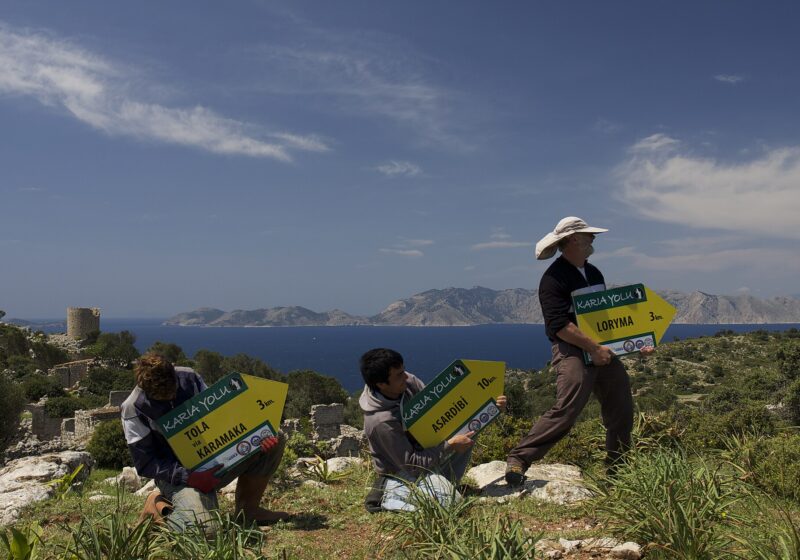
The hills behind the bays are ideal for slow, meditative walking in the cooler months, along old paths between villages and olive groves. A morning walk up to a viewpoint, then breakfast, is about as good a routine as you can find. Our guide to walking the Carian Trail near Gümüşlük has ideas for routes and seasons.
Evenings are quieter still. Gümüşlük faces west, and the daily ritual of watching the sun drop behind Rabbit Island is, in its own way, a kind of meditation.
Sunset in Gümüşlük today 18:29
Hamams and bodywork
The Turkish bath (hamam) is a good way to end a week of walking and swimming: a warm marble room, a scrub with a coarse mitt (kese) and a soapy foam wash. Many larger hotels on the peninsula have their own hamams open to outside guests by appointment, and some offer massage alongside. Ask about separate sessions or private bookings if you prefer.
Good to know: If you have health conditions, are pregnant or have high blood pressure, check with a doctor before using a hot hamam or sauna, and tell the attendant.
Choosing your season
- Spring (April to June): Mild temperatures, green hills, wildflowers. The water is still cool in April but warm enough for most by late May. Retreat season begins.
- Summer (July and August): Hot and busy. Practise early in the morning or at sunset, and rest in the middle of the day. The meltem wind can cool the afternoons.
- Autumn (September and October): For many, the best time of all: warm sea, softer light and calmer villages. See September and October in Gümüşlük.
- Winter (November to March): Quiet, green and often sunny between rainy spells. Fewer classes and retreats run, but long walks and cold-water swims come into their own.
- Jan 16° Jan: Sea 17°C, Air 16°C. Wettest stretch of the year; many waterfront places closed
- Feb 16° Feb: Sea 16°C, Air 16°C. Almond blossom, green hills, cool sea and very few visitors
- Mar 18° Mar: Sea 16°C, Air 18°C. Wildflowers and herb season; coldest sea of the year
- Apr 22° Apr: Sea 17°C, Air 22°C. Warm days for walking; places start to reopen
- May 27° May: Sea 19°C, Air 27°C. Long light, quiet bays; the brave start swimming
- Jun 32° Jun: Sea 23°C, Air 32°C. Proper summer arrives; sea is warm, crowds still manageable
- Jul 35° Jul: Sea 25°C, Air 35°C. Hot, busy and windy afternoons; book tables and rooms early
- Aug 35° Aug: Sea 26°C, Air 35°C. Peak season and warmest sea; traffic and prices at their highest
- Sep 31° Sep: Sea 25°C, Air 31°C. Sea still warm, heat easing; many say the best month
- Oct 26° Oct: Sea 23°C, Air 26°C. Golden light and easy swimming; first rains late in the month
- Nov 21° Nov: Sea 20°C, Air 21°C. Season winds down; mild days, sea still swimmable for some
- Dec 17° Dec: Sea 18°C, Air 17°C. Mandarin harvest, storms and calm spells; very local
October: Golden light and easy swimming; first rains late in the month
Before you go
- Bring your own mat if you plan to practise outdoors or join informal sessions.
- Sun protection: Even early in the day the sun is strong from May to September.
- Hydration: Drink more water than you think you need, especially if you practise in the heat.
- Language: Most teachers working with international guests teach in English; check in advance.
- Prices: Drop-in classes are generally affordable; retreats vary widely depending on accommodation, food and group size. As of 2026 prices change quickly, so ask for a full breakdown.
- Staying longer: Slow wellbeing works best with time. If you are planning a longer stay, see where to stay.