The Fisherman of Halicarnassus and the Birth of the Blue Voyage
Exiled to a remote sponge-diving town in 1925, an Oxford-educated writer fell for Bodrum and invented a way of travelling the coast. His story, briefly.
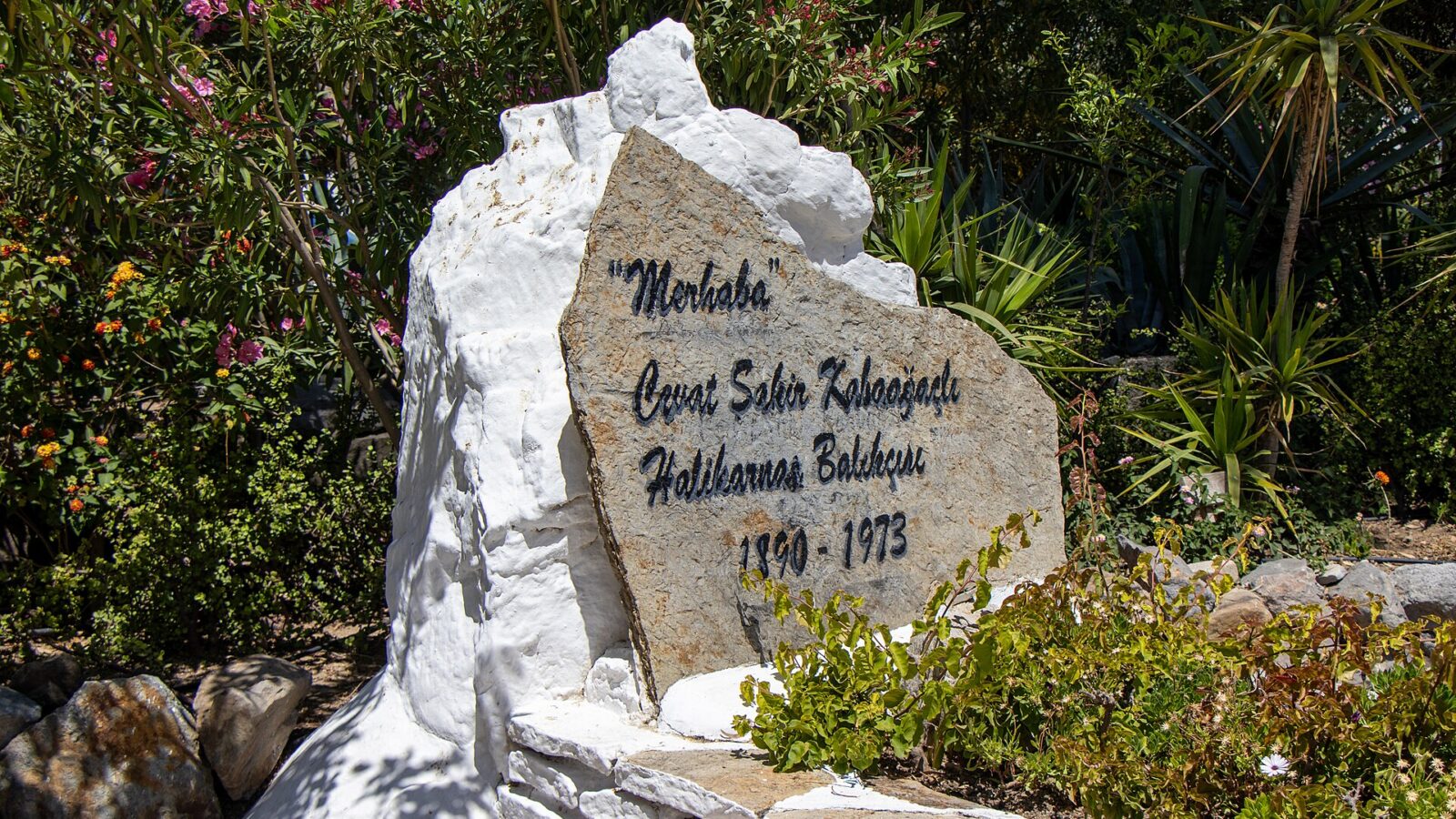
In 1925 a writer was sent to Bodrum as a punishment. At the time it was a small town of fishermen and sponge divers with no proper road, and exile there was meant to feel like the end of the world. He stayed for most of the next quarter of a century, took the town’s ancient name as his own and helped give modern Bodrum much of its identity.
His name was Cevat Şakir Kabaağaçlı, but almost everyone in Türkiye knows him as Halikarnas Balıkçısı, the Fisherman of Halicarnassus.
An unlikely beginning
He was born Musa Cevat Şakir on 17 April 1890 in Crete, then part of the Ottoman Empire, where his father, Mehmed Şakir Pasha, was serving as a senior official. The family was well connected; his uncle had been a grand vizier, and two of his sisters, Fahrelnissa Zeid and Aliye Berger, became well-known painters.
He went to Robert College in İstanbul and then to Oxford, where he studied history, apparently at his family’s insistence rather than the maritime studies he wanted. He later spent time in Italy studying painting.
His early life was marked by tragedy. In 1914 his father died from a shot fired from Cevat Şakir’s gun during a family quarrel. He was convicted and spent several years in prison before being released, reportedly because of ill health.
Exile to Bodrum
In April 1925 the weekly magazine Resimli Hafta published a short story he had written under the pseudonym Hüseyin Kenan, about soldiers sentenced to death for desertion. In the tense climate of the early Republic it was seen as turning people against military service. He was tried by the İstanbul Independence Tribunal and sentenced to three years of internal exile as a fortress prisoner in Bodrum.
The town he found had a castle built by the Knights of St John, a harbour full of sponge boats and almost no connection to the outside world except by sea. According to accounts of his journey, the last stage from Milas was made on horseback.
He was pardoned after serving roughly half his sentence in Bodrum and finished it in İstanbul. Then he did something nobody expected: around 1928 he went back to Bodrum by choice.
A quarter of a century on the coast
He lived in Bodrum until 1947, when he moved to İzmir so his children could go to school there. In those years he fished, painted, guided the occasional visitor to the ancient sites, and wrote. He befriended the fishermen and sponge divers whose lives fill his stories.
He also planted trees, a lot of them. He reportedly carried seeds in his pockets, worked for a time as a gardener for the municipality and is credited with many of the citrus trees and palms that still shade the town. When you walk under them today, you are walking through part of his legacy.
The pen name came from the town itself. Halicarnassus was Bodrum’s ancient name, the city of Mausolus and the birthplace of Herodotus, and by calling himself its fisherman he tied his own life to that long history.
The Blue Voyage
The idea that made him a household name in Türkiye is the Mavi Yolculuk, the Blue Voyage. From the mid-1940s, he and friends began setting out from Bodrum on simple sailing trips along the coast, especially into the Gulf of Gökova. A Bodrum octopus fisherman known as Paluko is often named as an early companion.
These were not luxury cruises. Supplies were basic: water, cheese, bread or ship’s biscuit, tobacco and rakı. The point was to leave newspapers and radio behind, sleep on deck, swim in empty coves and visit the ancient ruins scattered along the shore.
Over the years the trips drew writers and artists, among them the humanist writer Sabahattin Eyüboğlu, his brother the painter Bedri Rahmi Eyüboğlu, and the classicist Azra Erhat. The name “Mavi Yolculuk” is usually credited to Sabahattin Eyüboğlu, and Azra Erhat’s book of the same name, published in 1962, fixed it in Turkish culture.
Good to know: Today “blue cruise” usually means a week on a wooden gulet with a crew and a cook. It is far more comfortable than the original, but the basic idea, slow days moving between quiet bays, is the same. Our guide to boat trips covers how to choose one.
Writing the Aegean
His books cover short stories, novels, essays and retellings of myth. Among the best known:
- Ege Kıyılarından (1939) and Merhaba Akdeniz (1947), early story collections about coastal life.
- Aganta Burina Burinata, a novel of the sea and sponge divers, still widely read.
- Anadolu Efsaneleri (1954) and Anadolu Tanrıları (1955), on the myths and gods of Anatolia.
- Mavi Sürgün (1961), his memoir of exile.
- Uluç Reis (1962) and Turgut Reis (1966), novels about Ottoman sea captains. Turgut Reis is traditionally said to have been born on the Bodrum Peninsula, and the town of Turgutreis bears his name.
He argued, with his friends, that the ancient civilisations of Anatolia, Greek and Carian included, were part of the heritage of everyone who lives there now. This humanist outlook, sometimes called “Blue Anatolianism”, still runs through Turkish writing about the Aegean.
Where to find him today
Cevat Şakir died in İzmir on 13 October 1973. As he wished, he was buried in Bodrum, on a hill above Gümbet, where ceremonies are held on his birthday and on the anniversary of his death. A bust of him stands in the centre of Bodrum, and items from his life, donated by his family, have been shown at the town’s maritime museum.
The house he lived in has had a more ordinary fate, used for years as a restaurant, and residents have campaigned to turn it into a museum.
Before you go
- Read first: English translations of his work are limited, but some stories and essays have appeared in translation; Mavi Sürgün and Aganta Burina Burinata are the classics if you read Turkish.
- Visit: His grave above Gümbet is a short drive from Bodrum town and has a view over the bay he loved.
- Go sailing: A day on a gulet, even a short one, is the easiest way to understand what he found. See boat trips.
- Keep going: For the older layers of the peninsula he loved, read about Myndos and the artists who later settled in Gümüşlük.